


The project targets roads and embarkment and promotes the use of fast-growing tree species, which will contribute to the restoration of degraded lands and improve the livelihoods of local communities through sustainable forest management practices. The strip plantation component is expected to provide multiple benefits, including improved soil fertility, carbon sequestration, and increased income for the communities through the sale of timber and non-timber forest products.
Strip plantations of 4,826 km are being established on bare and unused land available on the sides of roads, coastal embankments, railway tracks, and river and canal banks through the social forestry model. Most of these areas have been under the control of different government agencies. Depending on the width of available land, rows of trees have been planted at 2mx2m spacing. Choice of species has depended on site conditions and preferences, and the Water Development Board guidelines on establishment of embankment plantations have been followed.
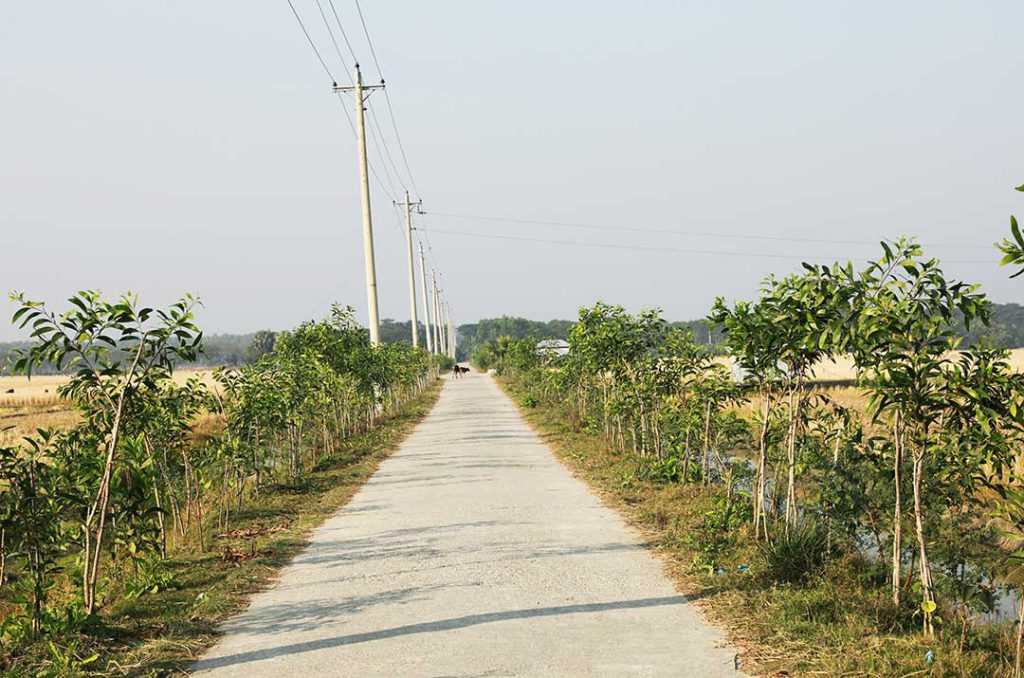
Necessary effort has been made to promote strip plantation on both sides of the river and canals to establish a strip of buffer zone or ecotone with 100 to 500 m width along the river and canal banks. Efforts have been made to develop a strategy and monitoring mechanism for out-planting trees in the private land along the river bank and canals.
Strip Plantation Target
| Plantation_Types | Category | Units | Seedlings/ha | 2018-2019 | 2019-2020 | 2020-2021 | 2021-2022 | 2022-2023 | 2023-2024 | Total |
|---|---|---|---|---|---|---|---|---|---|---|
| ToF: Strip Plantation | Fast | SKM | 1000 | 175 | 1321 | 895 | 1069 | 491 | 875 | 4826 |
 Bengali